Bigfoot Sightings Canada
Launch promo ends in 00:00:00

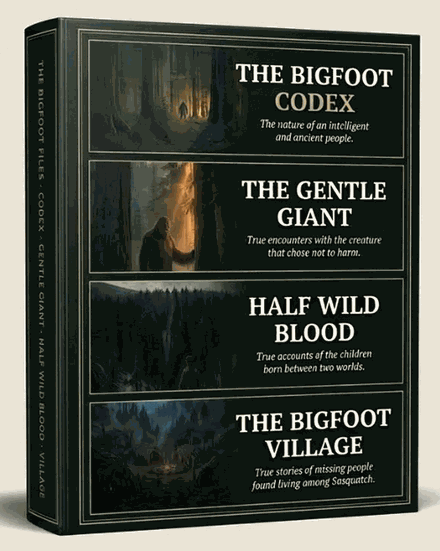
Four-book collection · 61 cases and accounts

The Bigfoot Files

Four books, one subject, and one refusal: none of them treats him as a monster.

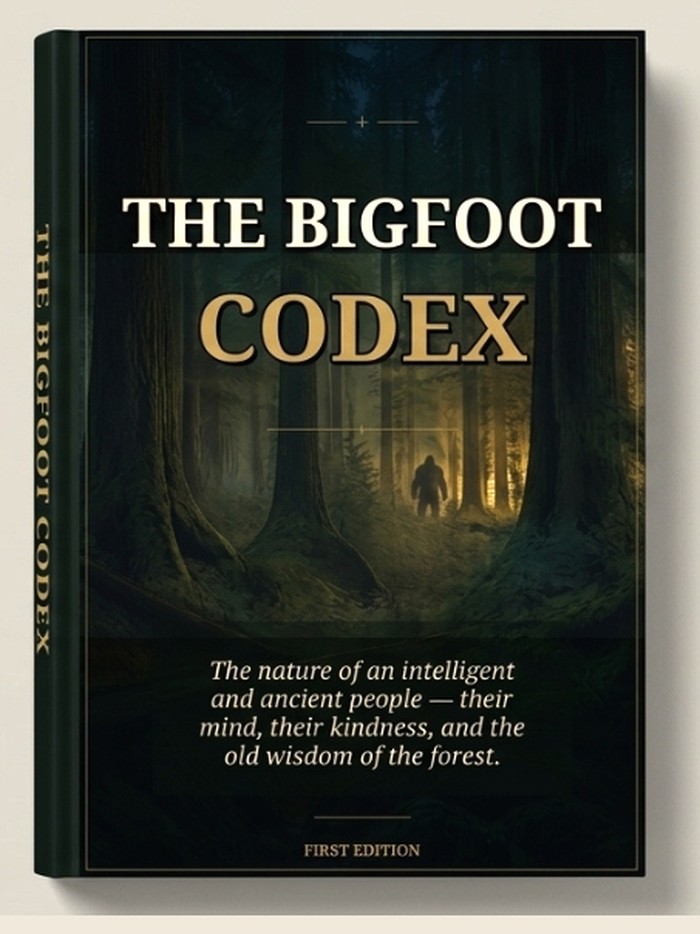
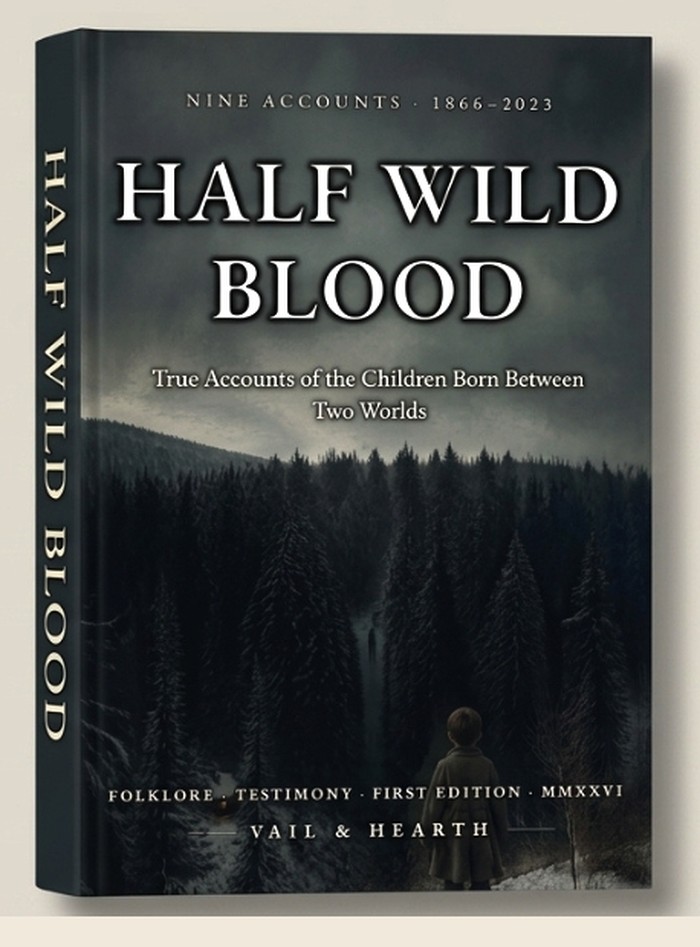
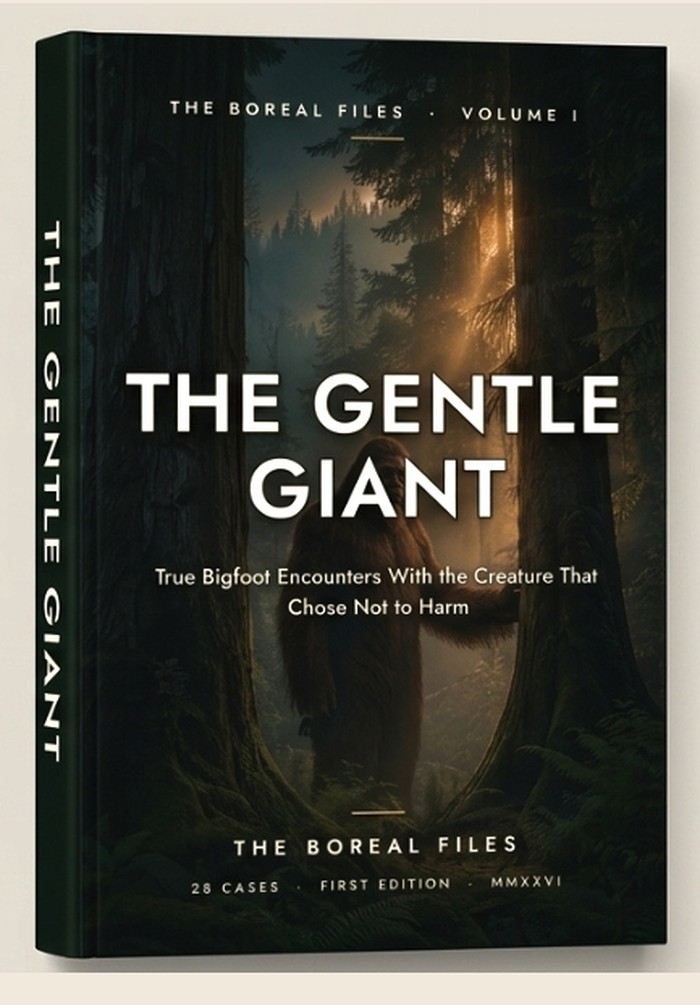
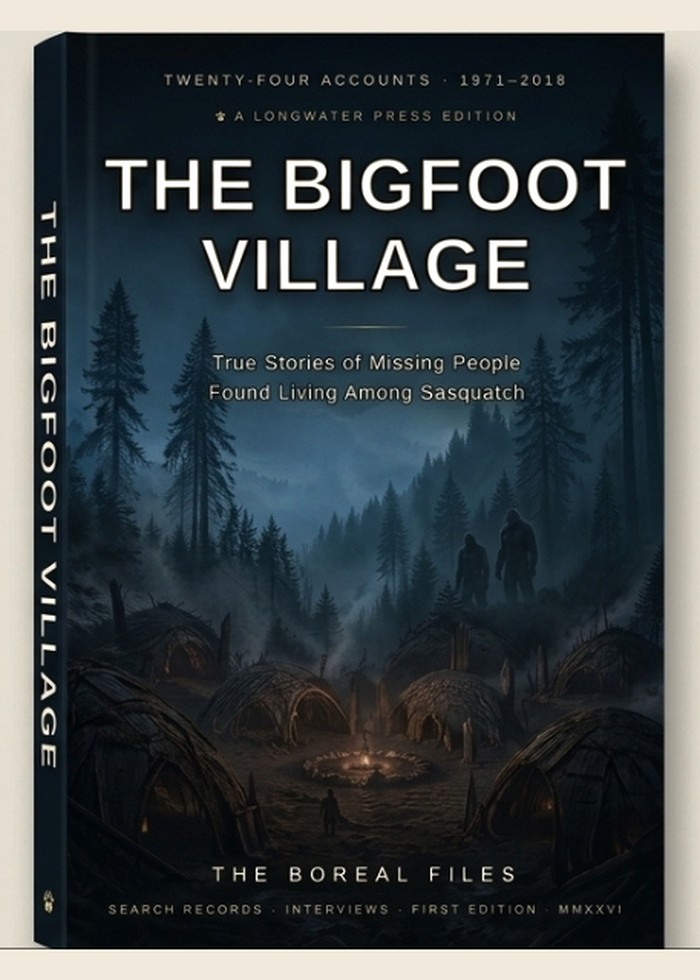
The Bigfoot Codex is the portrait — what kind of mind is out there in the deep timber, drawn from the researchers, the witnesses and the First Peoples who knew him first. The Gentle Giant is twenty-eight cases with the strangest possible ending: nothing happened. Half Wild Blood is nine accounts, across a century and a half, of the children the record could not place. And The Bigfoot Village is twenty-four missing-person files where somebody was found in far better condition than they had any right to be. Testimony throughout, with the sourcing stated plainly — and where something can be checked, each book tells you where to look.

Real Voices

“I read Two Hours, Forty-One Minutes in The Gentle Giant and had to put the book down and go outside. Thirty-one years cutting line in this country, and that is the first time anybody has written down the part I could never explain — that it was right there, and it did nothing.”

Wayne T. Wayne T.63, Prince George, British Columbia

“I expected Half Wild Blood to be lurid and it is the opposite. Chapter Nine prints the genetic result in full even though it wrecks the story, and the book keeps going anyway, because it was never really about that. I have thought about those nine children every day since.”

Marlene D. Marlene D.66, Thunder Bay, Ontario

Forty-One Times — the first account in The Bigfoot Village — is a man saying ‘we’ forty-one times in a debrief and never once meaning us. I bought the collection for the Codex. It is the Village I keep going back to.”

Doug R. Doug R.61, Chapleau, Ontario
4.9 / 5 stars · over 8,000 readers of the files
Get The Bigfoot Files — $73.98 $29.99
Instant download · Yours forever
Secure checkout via Gumroad · Visa · Mastercard · Amex · PayPal
4Volumes
389Pages
61Cases & accounts
1866–2023Span of the record

I

He does not arrive like a monster

He arrives like a silence that is paying attention.

Nearly everyone who has met him says the same strange thing: they felt him before they saw him. The woods go quiet — no birds, no insects, a silence with a weight to it. The hair rises on the arms. There is a pressure in the chest, low, almost a sound but not quite, and a sudden animal certainty of being watched.

People who have never read a word about any of this describe that feeling in the same words, which is itself a kind of evidence. And then, in the overwhelming majority of cases, the thing that everybody expects to happen next does not happen.

That absence is the subject of this collection. For most of the last century the popular record of this animal has been built almost entirely out of fear, because fear has a shape — a beginning, a rising middle, and a witness who ran. Fear makes a story that finishes itself. The accounts in these four books do not finish themselves. A man wakes up and the thing is gone. A child is found sitting in the open, warm, at a temperature that should have killed her. A camera records eleven hours of an animal doing almost nothing at all, a few paces from a person who could not defend himself.

It stood there long enough to be seen, and it did nothing. That is the whole of it. That is the part nobody knows what to do with.

Cross the world and you will find him under a hundred names, told by peoples who never met and never could have compared notes. The Coast Salish of this coast gave us the word we still use, sasq’ets, the wild man. In the Himalaya he is the Yeti; in the Chinese forests, the Yeren; in the Australian bush, the Yowie; in the mountains of central Asia, the Almas. Medieval Europe carved a wodewose, a hairy wild man, into the stonework of its churches. When people who share no language and no history all describe the same tall, hair-covered figure at the edge of the trees, a careful person stops asking whether the story is true and starts asking why it is everywhere.

And in the oldest accounts — above all in the accounts of the First Peoples of this continent — he is not a beast at all. He is a kind of people. An older brother. A wild relative. A nation of the forest that keeps to itself. The tribes had protocols for him: you did not hunt him, you did not mock him, you left him his ground and he left you yours. That framing is four hundred years older than every scary story you have ever heard, and it is the one these books believe.

II

The Difference

What separates these four volumes from the shelf of Bigfoot books you have already read.

 The usual Bigfoot bookThe Bigfoot Files
The question it asks How do I find him, film him, prove him? What is he — what kind of mind, what kind of heart?
The cases it picks Screams in the dark, rocks at the cabin, the witness who ran The moment an animal of enormous capability could have done harm, and did not
Where it stands on the First Peoples A paragraph of colour before the monster material The oldest and most careful body of knowledge on the subject, treated as such
What it does with a bad result Quietly leaves it out Prints it in full, including where it contradicts the story
Sourcing “A friend of mine in the Forest Service” Incident reports, trail-camera logs, parish and coroner’s files, SAR debriefs — stated plainly
What it asks of you Believe, and go out looking Read the testimony, judge it as testimony, and leave him his ground

III

What’s Inside

The real contents of all four volumes. 389 pages, illustrated throughout.

The Bigfoot Codex

The Bigfoot Codex

49 pages · illustrated · first edition

The portrait volume, and the one to read first. Not a hunting book — a book about what kind of being he is, drawn from the researchers, the witnesses, and above all the peoples who knew him first, with true encounters set among it as windows.

  • Read This First
  • I · The Oldest Stories
  • II · What Kind of Being He Is
  • III · The Encounters
  • IV · What He Looks Like & Feels Like
  • V · The Life He Keeps Apart
  • VI · The Bloodlines
  • VII · The Old Ways of Knowing
  • VIII · If He Approaches You
  • IX · The Cases You Can Look Up
  • On Being Ready
Get The Bigfoot Codex — $9.99 Instant download · or take all four for $29.99
The Gentle Giant

The Gentle Giant

159 pages · 28 cases · the boreal files, volume I

Twenty-eight encounters that have one thing in common, and it is not the creature — it is the absence of an attack. Roughly a third began as trail-camera footage with a timestamp, an ambient temperature and a battery level, which means that when a witness says it stayed with him all night, there is now sometimes a way to check what all night actually means.

  • A Note on These Accounts
  • Introduction: The Thing That Did Not Happen
  • Part One · The Carriers (5 cases)
  • Field Notes I: Reading a Trail Camera
  • Part Two · The Ones That Stood Between (5 cases)
  • Field Notes II: The Interposition Pattern
  • Part Three · The Ones That Stayed (6 cases)
  • Field Notes III: On Staying
  • Part Four · The Ones That Gave (6 cases)
  • Field Notes IV: The Language of Left Objects
  • Part Five · The Long Memory (6 cases)
  • Field Notes V: Can They Remember Us?
  • Afterword · If It Happens to You
  • The Cases, by Region
Get The Gentle Giant — $27 Instant download · or take all four for $29.99
Half Wild Blood

Half Wild Blood

49 pages · 9 accounts · 1866–2023

The hardest book in the collection, and the one that reports the claim without endorsing it. Nine children the community decided were not quite people — and what that decision determined about where they slept, whether they went to school, who spoke to them, and what was written on the death certificate. Everything about how such children are supposed to have been conceived has been left out on purpose.

  • A Note on These Accounts
  • Introduction: The Space Between Two Words
  • Part One · The Ones Who Came Back (3 accounts)
  • Field Notes I: Reading a Family Story
  • Part Two · The Ones Who Were Raised (3 accounts)
  • Part Three · The Ones Who Were Tested (2 accounts)
  • Field Notes II: What the Genetics Actually Say
  • 9 · The Test Came Back Human
  • Afterword: What the Word Was For
  • Terms and Sources
Get Half Wild Blood — $9.99 Instant download · or take all four for $29.99
The Bigfoot Village

The Bigfoot Village

132 pages · 24 accounts · 1971–2018

Not the case where somebody is never found — those are common, and terrible, and ordinary. The case where somebody is found, in far better condition than the elapsed time allows, and cannot or will not say where they have been. Underweight but not starved. Weathered but not injured. Clothing replaced or repaired by hand with materials nobody sells.

  • A Note on These Accounts
  • Introduction: The Word They All Use
  • Part One · The Taken (6 accounts)
  • Field Notes I: Reading a Missing-Person File
  • Part Two · The Place (6 accounts)
  • Field Notes II: How a Camp Becomes a Village
  • Part Three · The Living (6 accounts)
  • Field Notes III: The Language Problem
  • Part Four · The Returned (6 accounts)
  • Field Notes IV: Why the Coordinates Never Work
  • Field Notes V: What Would Change My Mind
  • Afterword: The Pronoun
  • If Somebody You Know Comes Back
  • Chronology · The Accounts, by Region
Get The Bigfoot Village — $27 Instant download · or take all four for $29.99
Get The Bigfoot Files — $73.98 $29.99
Instant download · Yours forever

IV

About This Collection

Who put these files together, and on what terms.

Bigfoot Sightings Canada started the way most of these things start: with people writing in. Rangers and wardens and trappers and hydro linemen and search-and-rescue volunteers, and the families of people who went missing in remote country and came back — sending accounts they had mostly never told anybody, because of what telling it does to a working reputation.

These four volumes are what came of that. They are narrative reconstructions, built from witness statements, trail-camera logs, incident reports, recorded interviews, parish and census records, court and coroner’s files, search-and-rescue debriefs, and the oral testimony that circulates among people who spend their working lives out past the last road. Where a witness asked not to be identified, names, employers and precise coordinates have been changed. Where two versions of an account disagreed, the more conservative version was used.

Nothing in these books has been verified by any government agency, university or scientific body. Where anything has ever been tested, the published result is printed in full — including where it contradicts the story.

The illustrations are artists’ renderings prepared for these editions. They are interpretations of what witnesses described. None is a photograph, and none depicts any real person, place or animal.

And nothing here should be read as an invitation to go and look. Every person in The Bigfoot Village was lost first. The First Peoples had it right long before we did: he is not something we search out. He is someone we come to recognise, and to respect.

V

Questions

The five we get most, answered straight.

Are these real?

They are real accounts, really given, by real people — and that is exactly the claim these books make, no more and no less. Every account is presented as it was reported. Where a document exists, it is cited. Where a test was run, the result is printed even when it demolishes the story, which is what Chapter Nine of Half Wild Blood is entirely about.

No specimen supports any account in these pages, and nothing here has been confirmed by any agency or university. Judge it the way you would judge any testimony: by whether the people giving it had anything to gain. Most of them had a working reputation to lose.

Your videos are free. Why would I buy the books?

A video is one account, told once, in eight minutes, and then it is gone down the feed. These are 389 pages of the same work with the sourcing left in — the file notes, the regional index, the chronology, the field notes on how to read a trail camera or a missing-person file, and the accounts that are too long, too slow or too documentary to ever survive a video edit.

The channel stays free. The books are for the people who want the whole record in one place, laid out in an order that makes an argument.

Why only $29.99 for all four?

Because there is nothing to print, ship, warehouse or return. The books are finished; every extra copy costs us a download. Bought separately the four run $73.98, and plenty of readers do buy just one. The collection price is what it costs to have the whole argument at once, and it is set at the level where the most people read it rather than the level where each sale earns most.

What do I actually get, and how fast?

Illustrated PDFs, delivered by Gumroad the moment the payment clears — usually inside a minute, to your email and to a download page. They open on a phone, a tablet, a laptop or an e-reader, and they print cleanly if you would rather read on paper. There is no app, no subscription and no login to maintain. The files are yours to keep and to re-download.

Can I buy just one book?

Yes — every volume sells on its own, and the buy button for each one is beside its contents above. The Bigfoot Codex and Half Wild Blood are $9.99 each; The Gentle Giant and The Bigfoot Village are $27 each.

If you are only going to read one, read the Codex — it is the portrait the other three hang on. If you are going to read two, the second one should be The Gentle Giant. At that point you have spent $36.99 of the $73.98, and the collection is $29.99 for all four, which is the arithmetic most people do before they get to the bottom of this page.

Get The Bigfoot Files — $73.98 $29.99
Instant download · Yours forever

Before you go

Four books. 61 accounts.
$29.99 for all of it.

The Bigfoot Files — four-volume collection

Bought separately the four volumes run $73.98. The complete collection is $29.99 while the launch promo is on.

Get The Bigfoot Files — $73.98 $29.99
Instant download · Yours forever